7 / 3D navigation7.1 Navigation tasks

7

3D navigation

Locomotion, orientation and changes of scale

Étienne Peillard
IMT Atlantique

7 / 3D navigation7.1 Navigation tasks

Course outline

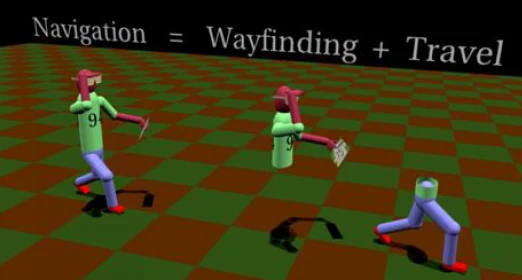
Navigation tasks

7.1

Physical locomotion

7.2

Steering and flying

7.3

Destination and world manipulation

7.4

Orientation and scale

7.5

Technique comparison

7.6

7 / 3D navigationPart 1 of 6

7.1

Navigation tasks

7 / 3D navigation7.1 Navigation tasks

Exploration, search and known targets

Exploration

Build knowledge of an unfamiliar place

Naive search

Find a target with unknown location

Primed search

Travel toward a known target

7 / 3D navigation7.1 Navigation tasks

Egocentric and exocentric navigation

Egocentric

Move as a participant within the scene

Exocentric

Control the scene from an external reference

Transition

Maintain correspondence between views

Alternative navigation metaphors
7 / 3D navigationPart 2 of 6

7.2

Physical locomotion

7 / 3D navigation7.2 Physical locomotion

Real walking

Input

Physical displacement

Output

Corresponding virtual displacement

Limit

The usable tracked space

7 / 3D navigation7.2 Physical locomotion

Walking in place

Input

Stepping without travelling far

Mapping

A step estimate drives virtual speed

Tradeoff

Reduced space, altered bodily cues

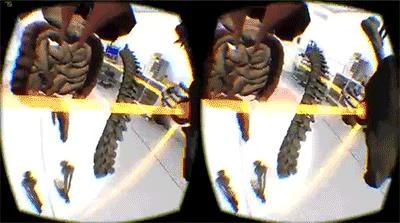
Walking-in-place demonstration
7 / 3D navigation7.2 Physical locomotion

Walking in place: source recording

7 / 3D navigation7.2 Physical locomotion

Walking in place

7 / 3D navigation7.2 Physical locomotion

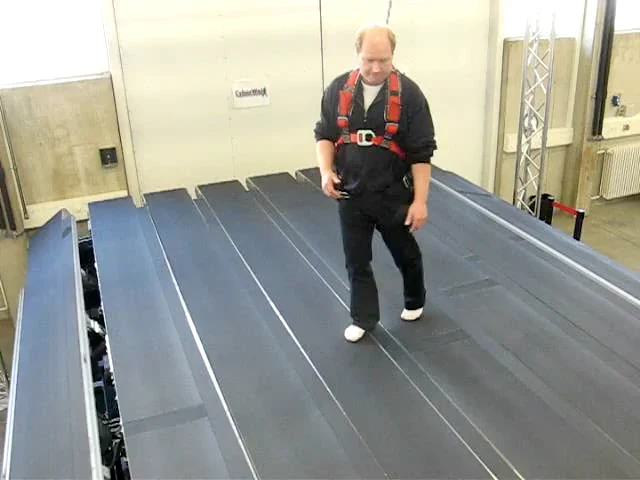
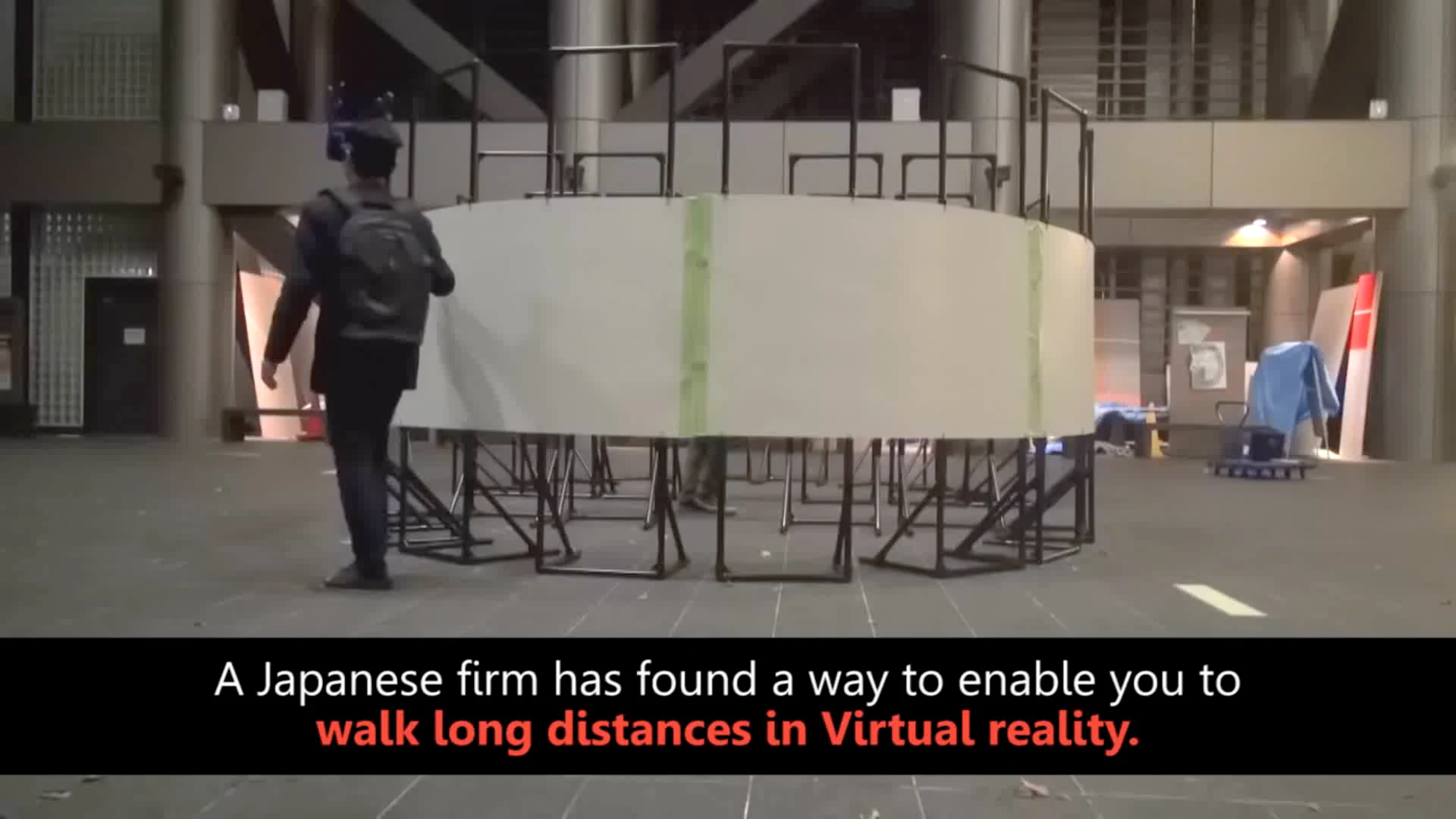
Dedicated walking devices

Active surfaces

Move beneath the user

Passive low-friction systems

Constrain and support sliding

Spherical or specialised mechanisms

Alternative physical arrangements

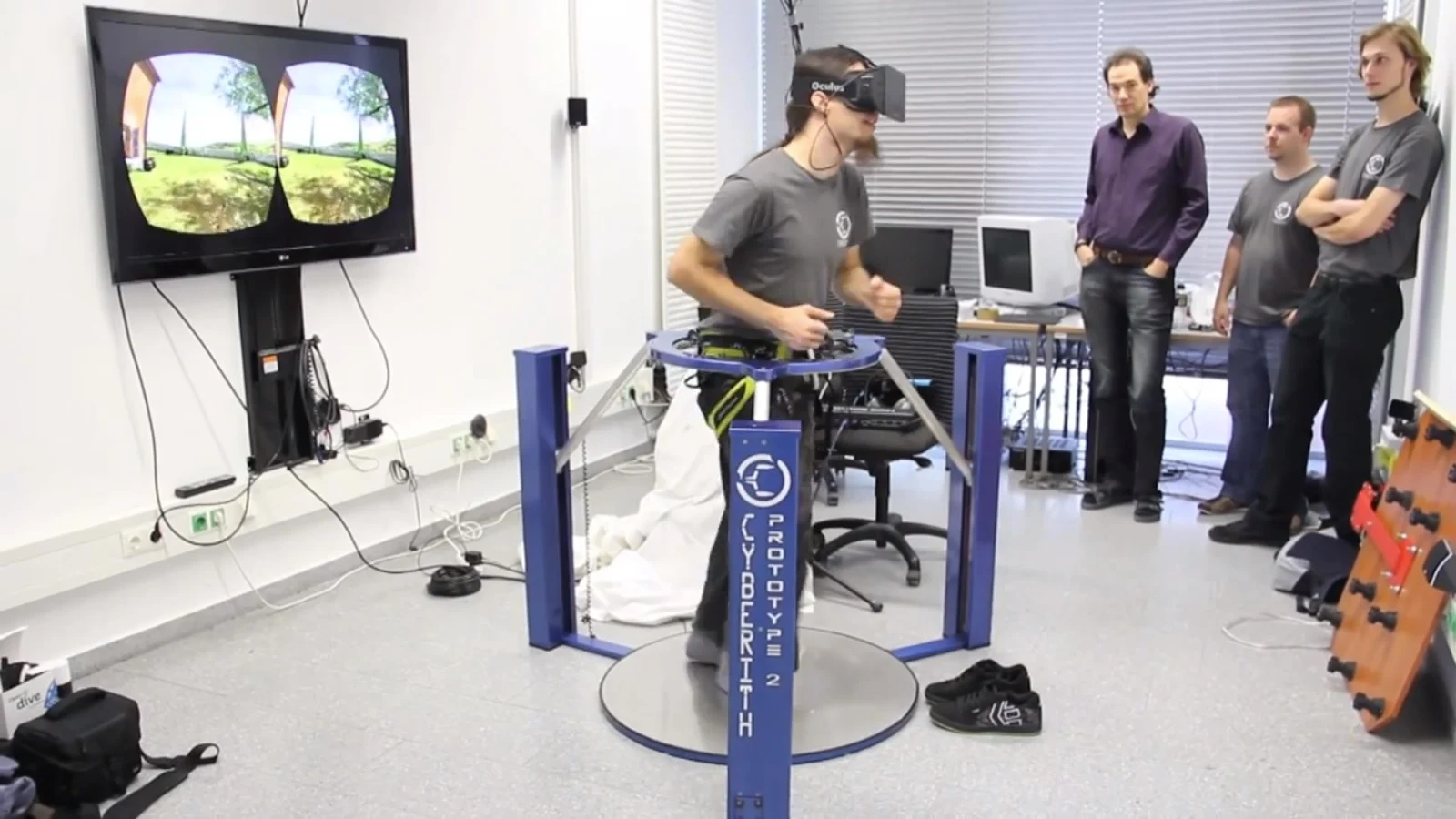
Dedicated locomotion devices
A moving-surface walking interface
7 / 3D navigation7.2 Physical locomotion

Redirected walking

Virtual path

The intended trajectory

Physical path

A different trajectory in the room

Mapping

Subtle changes to visual motion

Physical pathVirtual pathTracked roomPerceivedas straight
7 / 3D navigation7.2 Physical locomotion

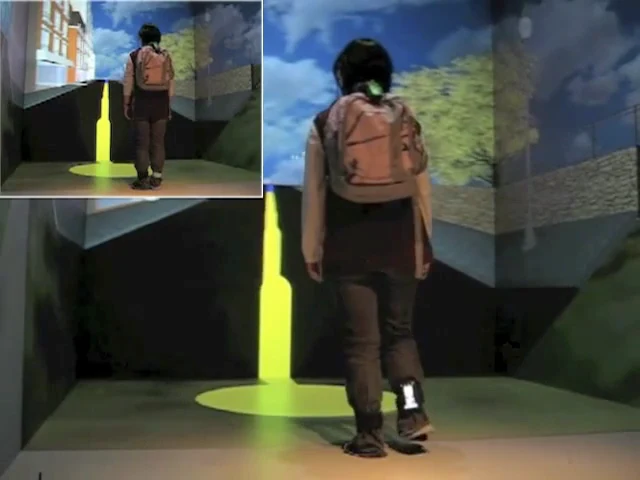
Rotational redirection

7 / 3D navigation7.2 Physical locomotion

An extended virtual corridor: source recording

7 / 3D navigation7.2 Physical locomotion

Redirection explanation

7 / 3D navigation7.2 Physical locomotion

An extended virtual corridor

7 / 3D navigationPart 3 of 6

7.3

Steering and flying

7 / 3D navigation7.3 Steering and flying

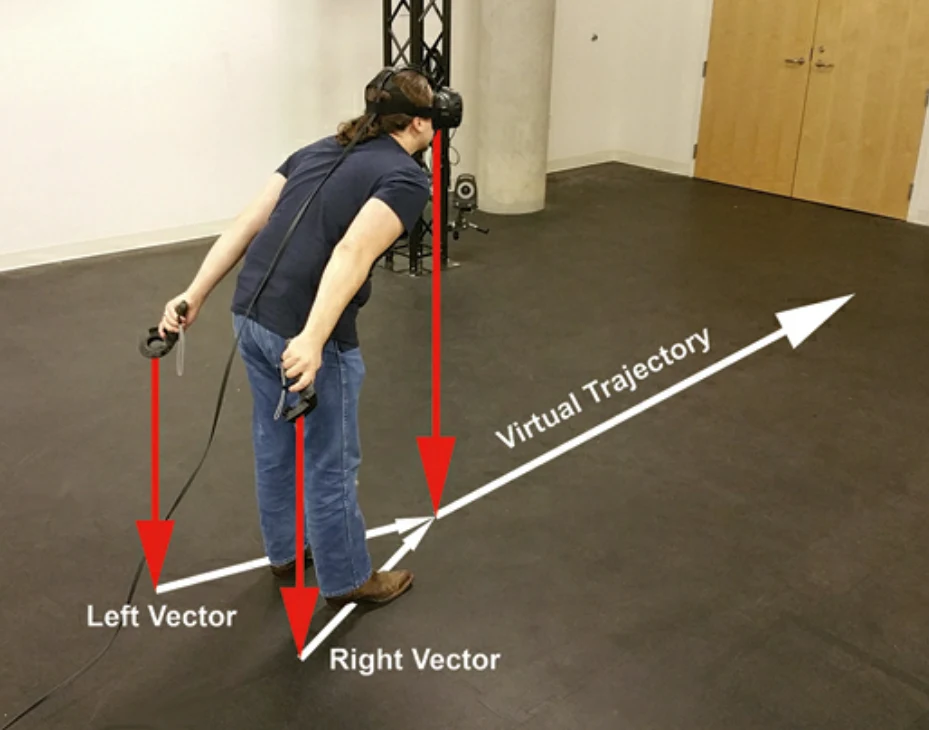
Steering and virtual flight

Direction

Where movement should go

Speed

How fast to move

Activation

When movement begins and ends

Body-related directions for virtual movement
7 / 3D navigation7.3 Steering and flying

Choosing a steering reference

ReferenceOpportunityConstraint
Head directionSimple to discoverLooking also changes travel direction
Hand directionViewing and travel can differArm pose and fatigue matter
Body directionA bodily referenceNeeds a reliable orientation estimate
Device axesFamiliar control mappingRequires learned coordination
7 / 3D navigation7.3 Steering and flying

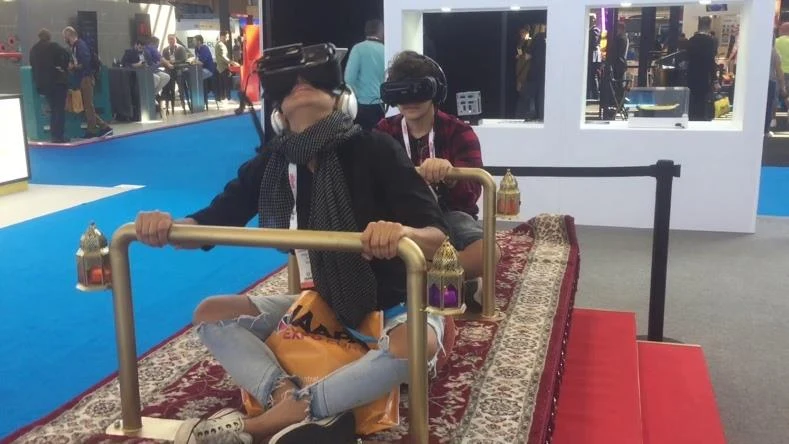
Vehicle metaphors

A cockpit

A stable reference and control context

Dedicated controls

Steering wheel, pedals or handles

Virtual dynamics

A chosen model of motion

Examples of vehicle-style navigation
7 / 3D navigationPart 4 of 6

7.4

Destination and world manipulation

7 / 3D navigation7.4 Destination and world manipulation

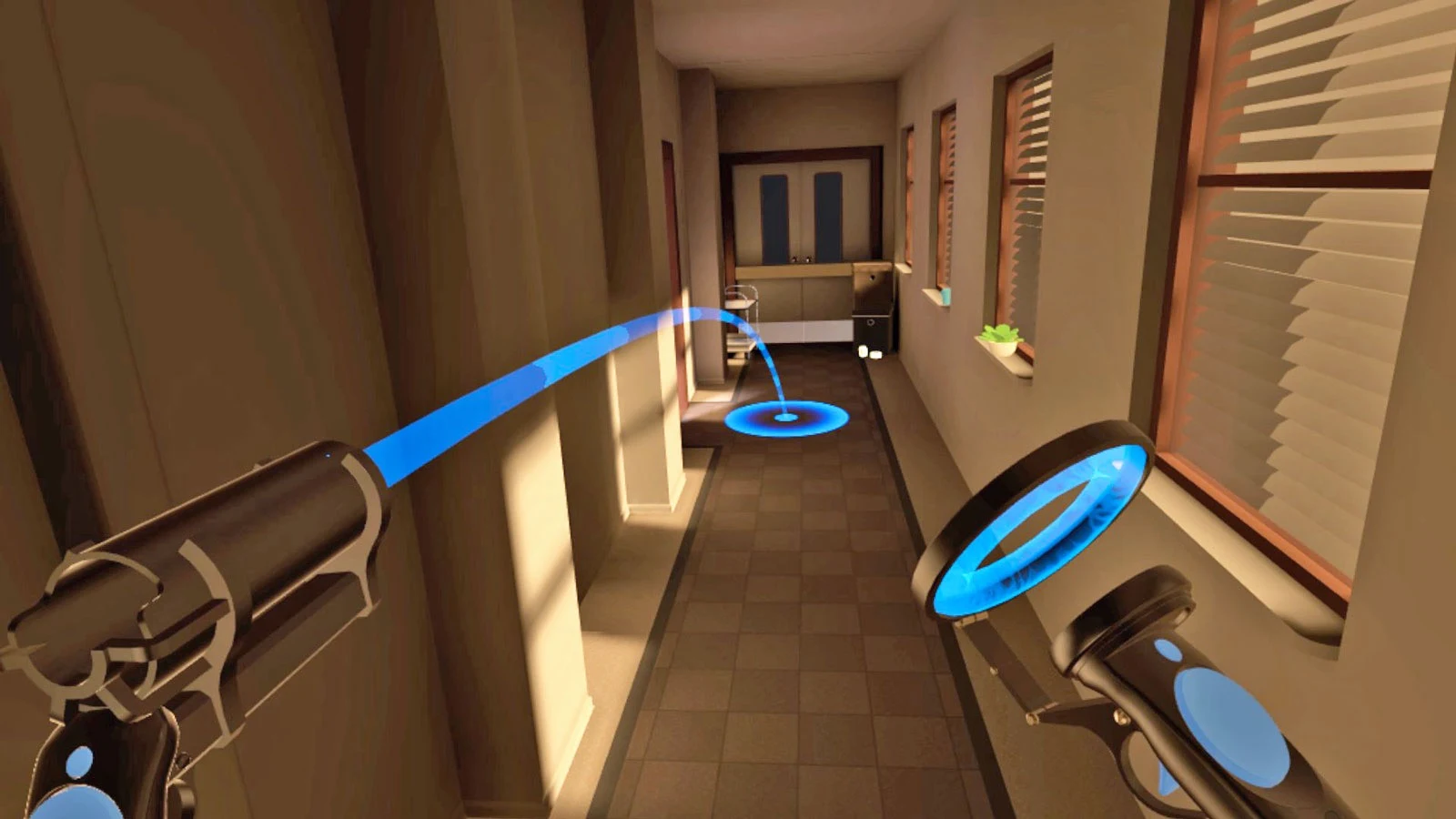
Teleportation

Specify

A destination and possibly orientation

Preview

The proposed arrival location

Commit

An immediate change of viewpoint

Destination preview for teleportation
7 / 3D navigation7.4 Destination and world manipulation

Immediate and interpolated transitions

TransitionPropertyTradeoff
ImmediateLittle visual travelA discontinuity in spatial context
InterpolatedA visible route or movementAdditional visual motion
Guided pathA constrained journeyReduced freedom of travel
7 / 3D navigation7.4 Destination and world manipulation

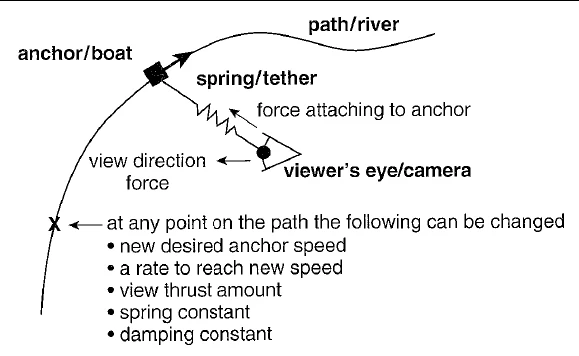
Guided navigation

A predefined route

The system constrains the journey

Local freedom

The user can look or move within an envelope

Control

Start, stop and limited steering

The water-skiing metaphor for guided navigation
7 / 3D navigation7.4 Destination and world manipulation

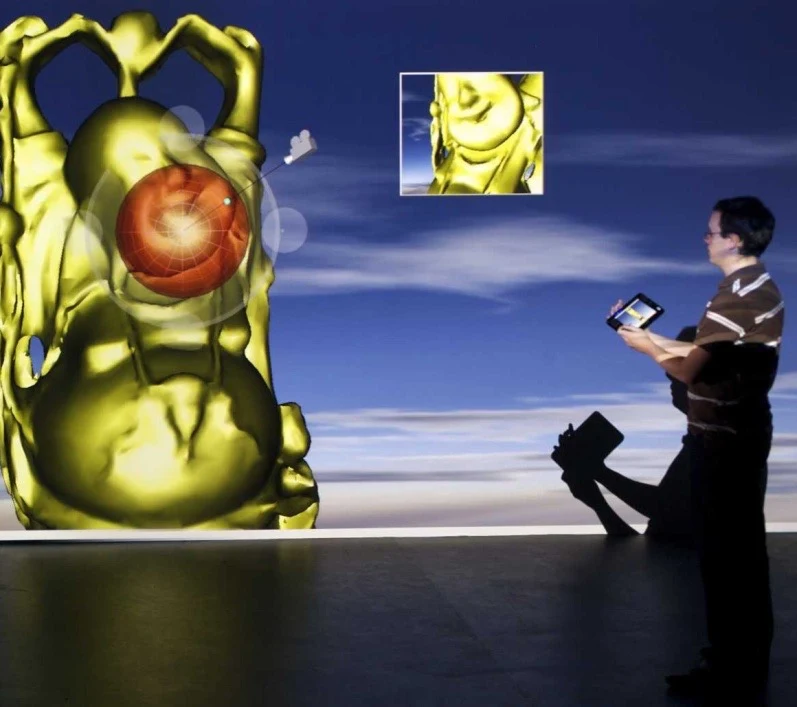
World in miniature

A spatial proxy

The environment within reach

Selection

Indicate a location on the model

Correspondence

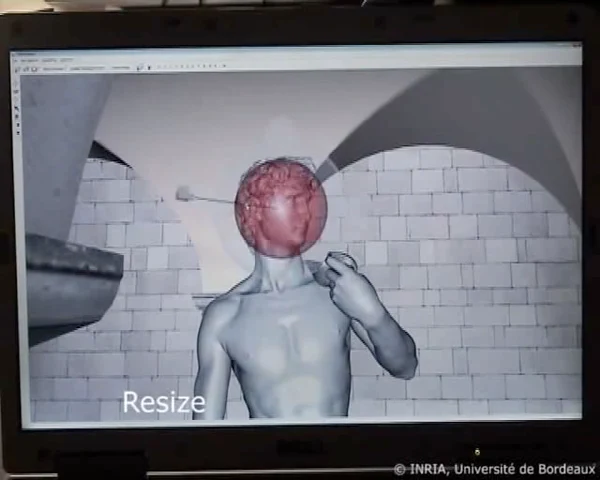
Map model coordinates to the world

A world-in-miniature representation
7 / 3D navigation7.4 Destination and world manipulation

WIM: source recording

7 / 3D navigation7.4 Destination and world manipulation

World in miniature

7 / 3D navigation7.4 Destination and world manipulation

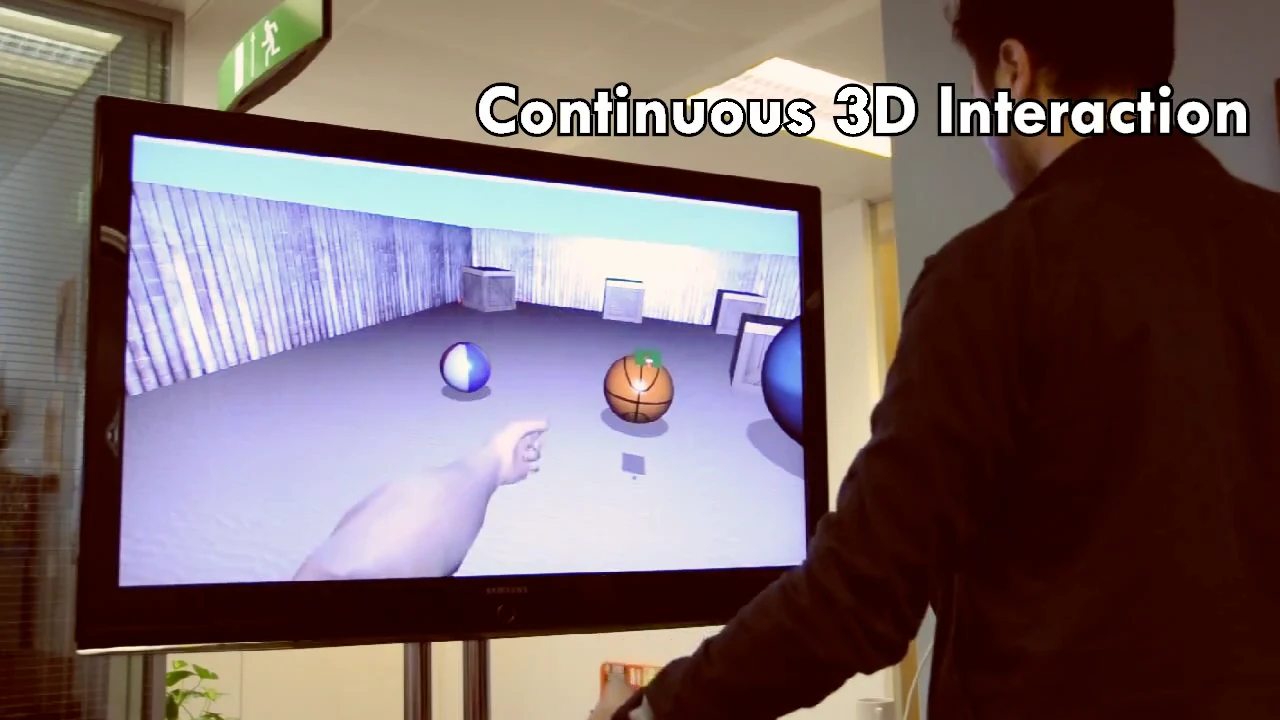
Grabbing the air

Grip

Establish a spatial anchor

Pull

Move the world relative to the body

Release

End or reset the mapping

Grabbing-the-Air world manipulation
Grab-and-pull movement
7 / 3D navigation7.4 Destination and world manipulation

Grabbing the air: source recording

7 / 3D navigationPart 5 of 6

7.5

Orientation and scale

7 / 3D navigation7.5 Orientation and scale

Spatial knowledge

Landmarks

Recognisable locations and objects

Routes

Ordered sequences of actions

Survey knowledge

Relations between places

7 / 3D navigation7.5 Orientation and scale

Orientation aids

Environmental landmarks

Distinctive places and local context

Maps and miniatures

An external spatial representation

Guidance cues

Visual or auditory direction

7 / 3D navigation7.5 Orientation and scale

Multi-scale navigation

Manual scale

The participant changes the scale

Automatic scale

The system adapts to a target or context

Additional control

Scale changes reach and travel

Multi-scale navigation examples
7 / 3D navigation7.5 Orientation and scale

Scale and movement gain

Smaller world

A physical step covers more of the model

Larger world

Fine spatial inspection

Transition

A new relation between body and environment

7 / 3D navigationPart 6 of 6

7.6

Technique comparison

7 / 3D navigation7.6 Technique comparison

Choosing a navigation technique

TechniqueOpportunityConstraint
Real walkingStrong bodily correspondencePhysical room limits
SteeringContinuous access to large spacesVisual–bodily mismatch
TeleportationRapid destination changesSpatial discontinuities
World manipulationReach and scale flexibilityMapping and orientation demands
7 / 3D navigation7.6 Technique comparison

A navigation evaluation

Performance

Search time and targets reached

Orientation

Pointing, route recall and location estimates

Experience

Control, effort and discomfort

7 / 3D navigation7.6 Technique comparison

Sources and further reading

C. Fleury, 3D interaction (2025–26)
FILA3, 3D interaction
Introduction to VR and AR
C. Fleury, 3D navigation (2025–26)