Grasping Real and Virtual Objects in AR: Study of Carry-Over Effects on Grasping Anticipatory Behavior
Abstract
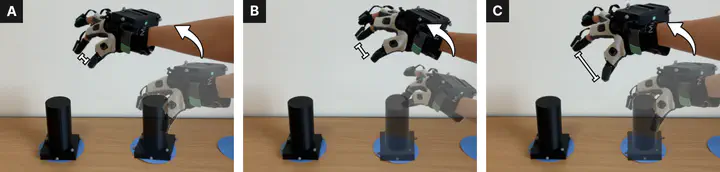
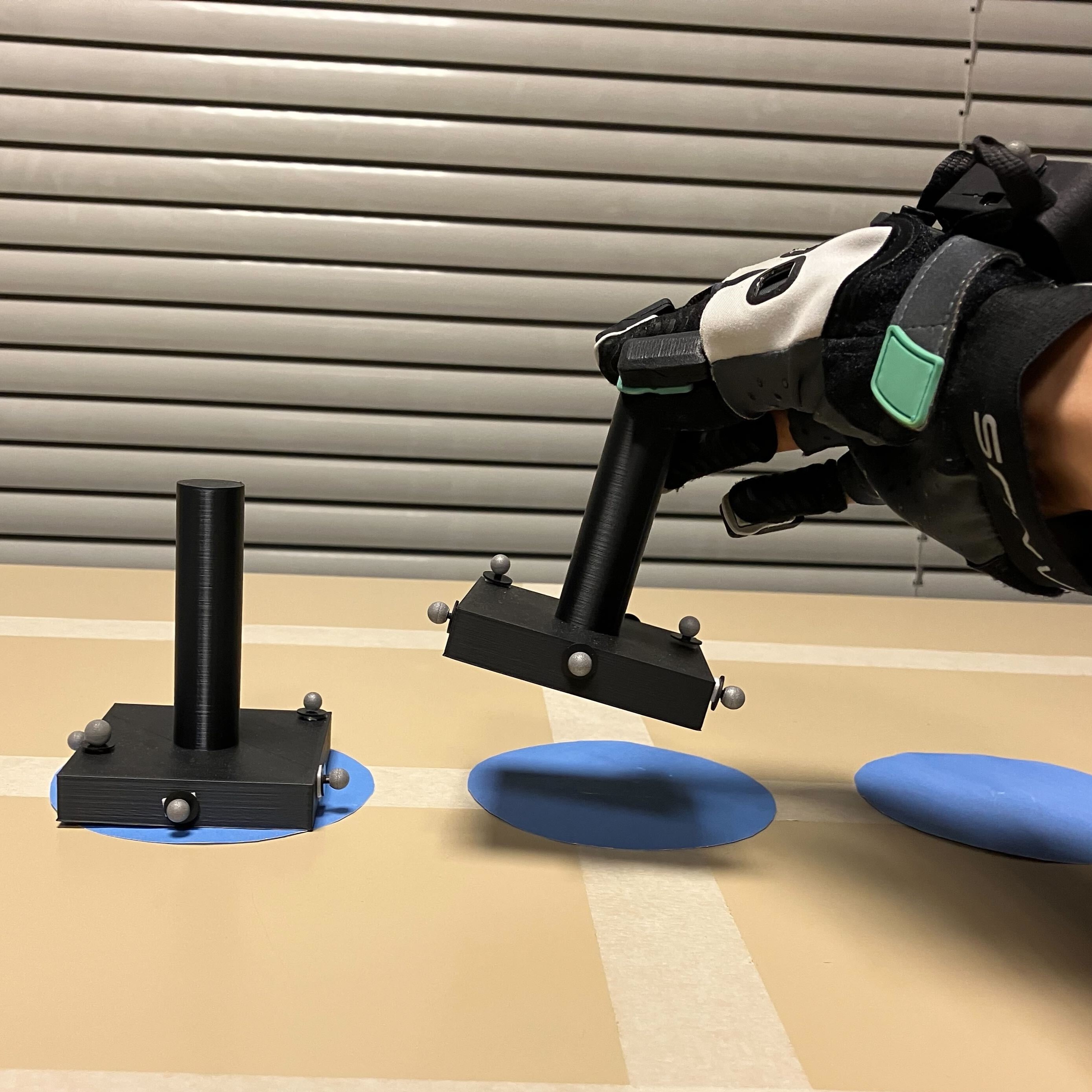
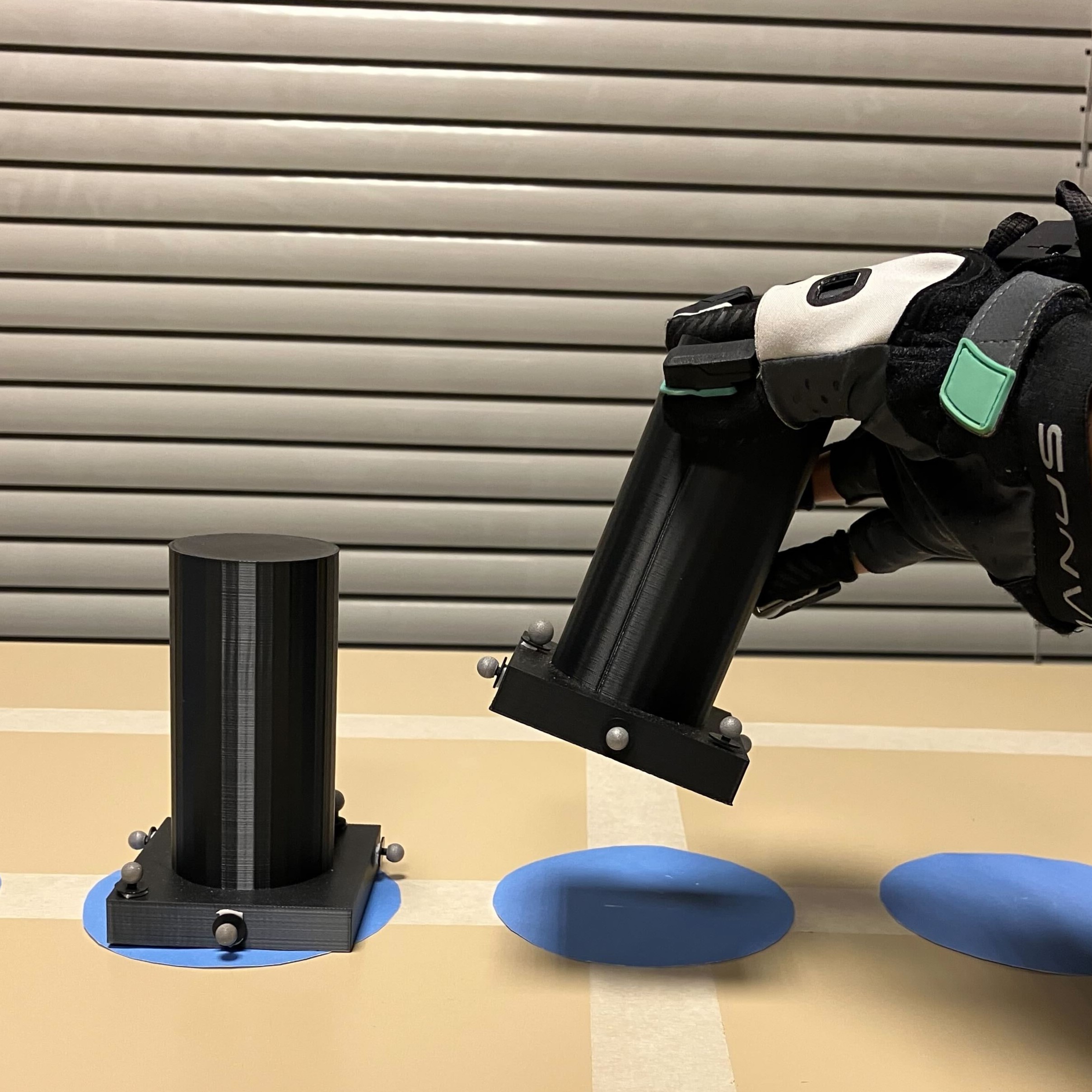
This study examines how virtual-object interaction changes the preparation of the next grasp of a real object in Augmented Reality. In a counterbalanced within-subject pick-and-place experiment with 28 participants, it compares pinch and physics-based virtual grasping with a real-only baseline, for small and large cylindrical objects. Anticipatory grip pre-shaping—peak grip aperture and its timing—reveals carry-over effects from the virtual interaction space: the way a virtual object is grasped changes the uncertainty expressed in the subsequent real grasp. The results highlight that interaction fidelity, depth cues, and missing tactile feedback must be considered when virtual and physical tasks alternate.
Experiment media

Juri Yoneyama
PhD Student

Etienne Peillard
Associate Professor
My research focuses on perception and embodied interaction in Virtual and Augmented Reality, including augmented affordances, body perception, and human-system cooperation in immersive environments.

Guillaume Moreau
Dean for Research and Innovation of IMT Atlantique

Ferran Argelaguet
Inria Research Scientist
Research scientist investigating Virtual and Augmented Reality, 3D interaction, and human perception.