Learning technical gestures in Virtual Reality
Physical fidelity of tool replicas for immersive training
CIFRE doctoral research · 2021–2024
CIFRE doctoral research with Clarté and Lab-STICC, carried out within the INUIT team.
 CIFRE partnershipClarté × Lab-STICCConnecting research on immersive interaction with the practical constraints of industrial training.
At a glance
Virtual Reality can make technical training safer, more repeatable, and easier to deploy—but a convincing training experience must also preserve what matters in the use of a real tool. This doctoral project investigated a practical and underexplored part of that question: when a tracked physical replica differs from the original tool, how does that affect performance, experience, and learning?
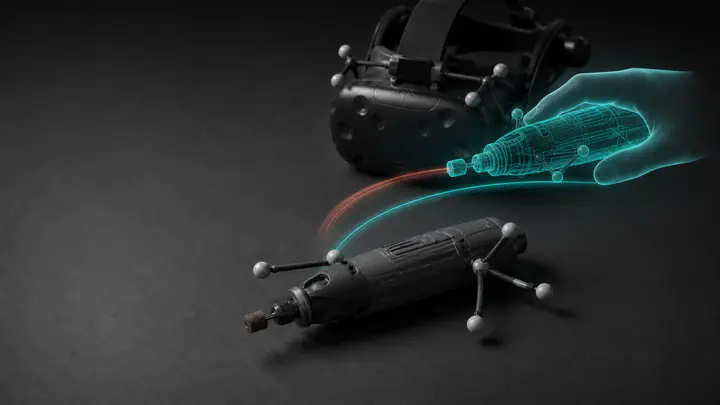
The project focused on instrumented replicas used alongside virtual tools. Their mass, shape, and handling properties create a bridge between the physical action of the learner and the simulated task. Rather than treating this prop as a simple accessory, the thesis studied it as a design variable for immersive learning.
From a real tool to its virtual replica
In industrial settings, XR training can help transfer know-how and prepare learners before they work on real equipment. Yet replicas are often modified to accommodate tracking, electronics, or robustness. Those modifications can change their physical properties, including their mass, and may alter the learner’s movement or perception of the task.
The project connected this applied challenge with a broader research goal: develop a framework for XR applications that can take the user’s work environment and the constraints of a gesture into account. The work considered the relationship between the physical prop, the virtual representation, and the technical gesture to be learned.
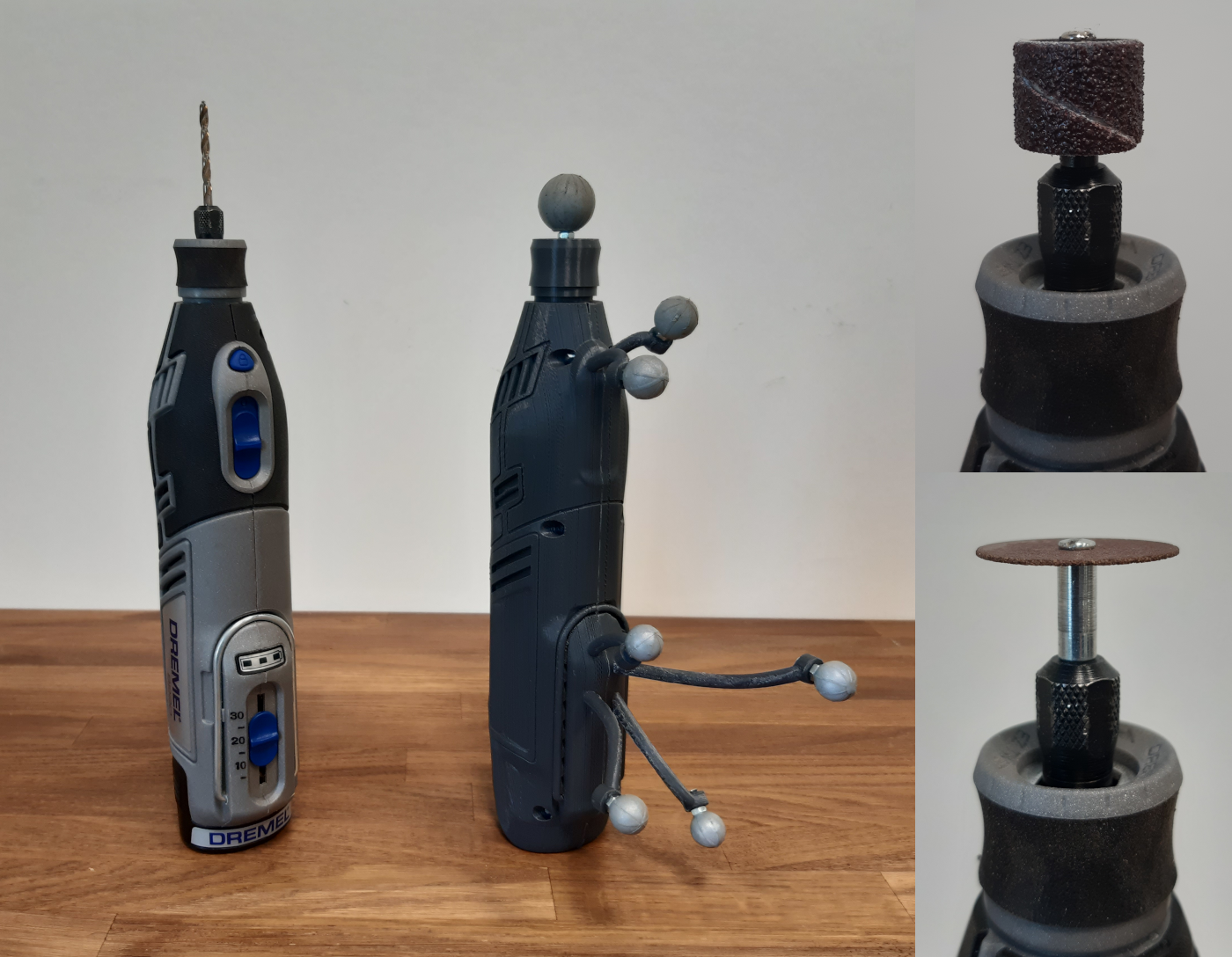
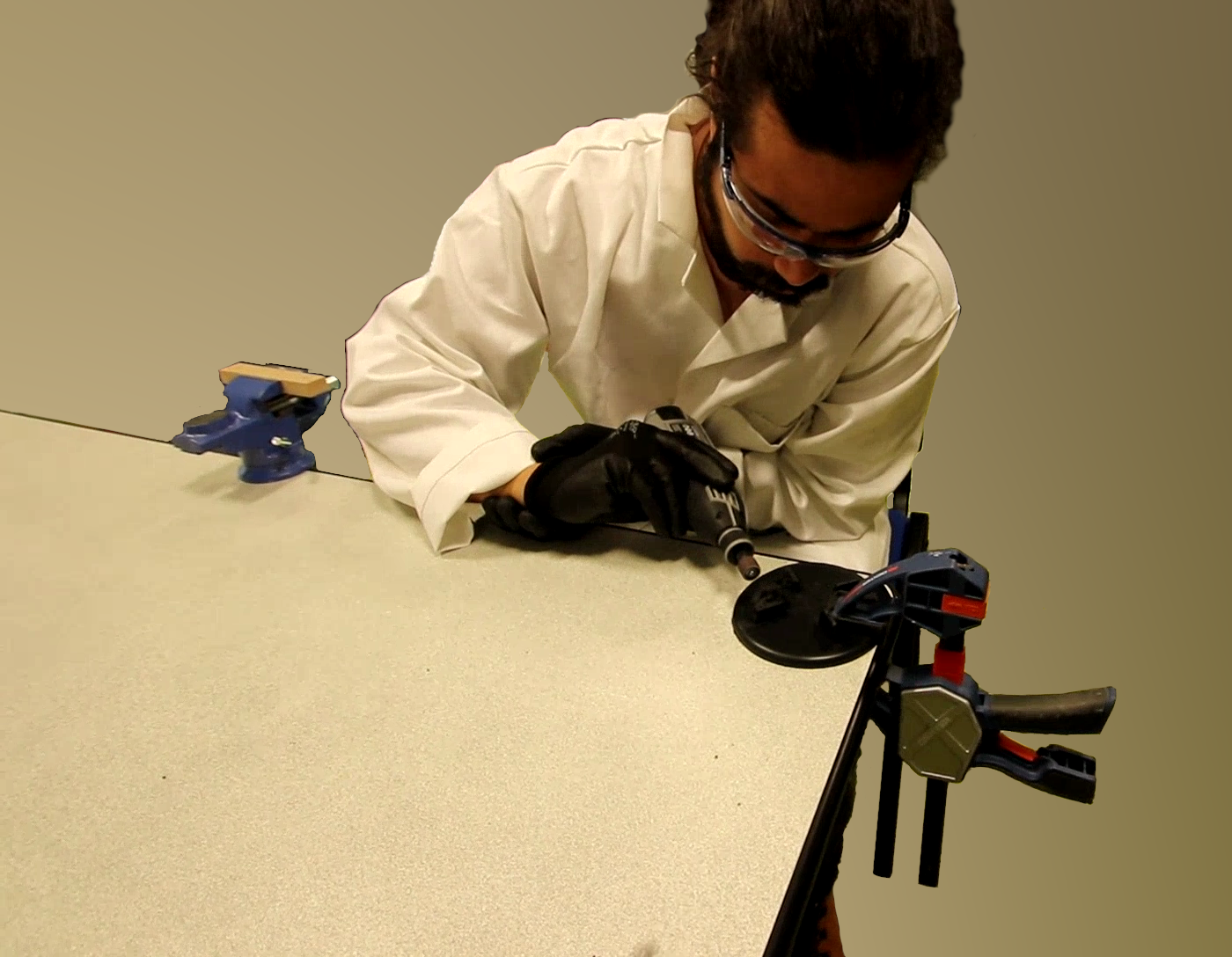
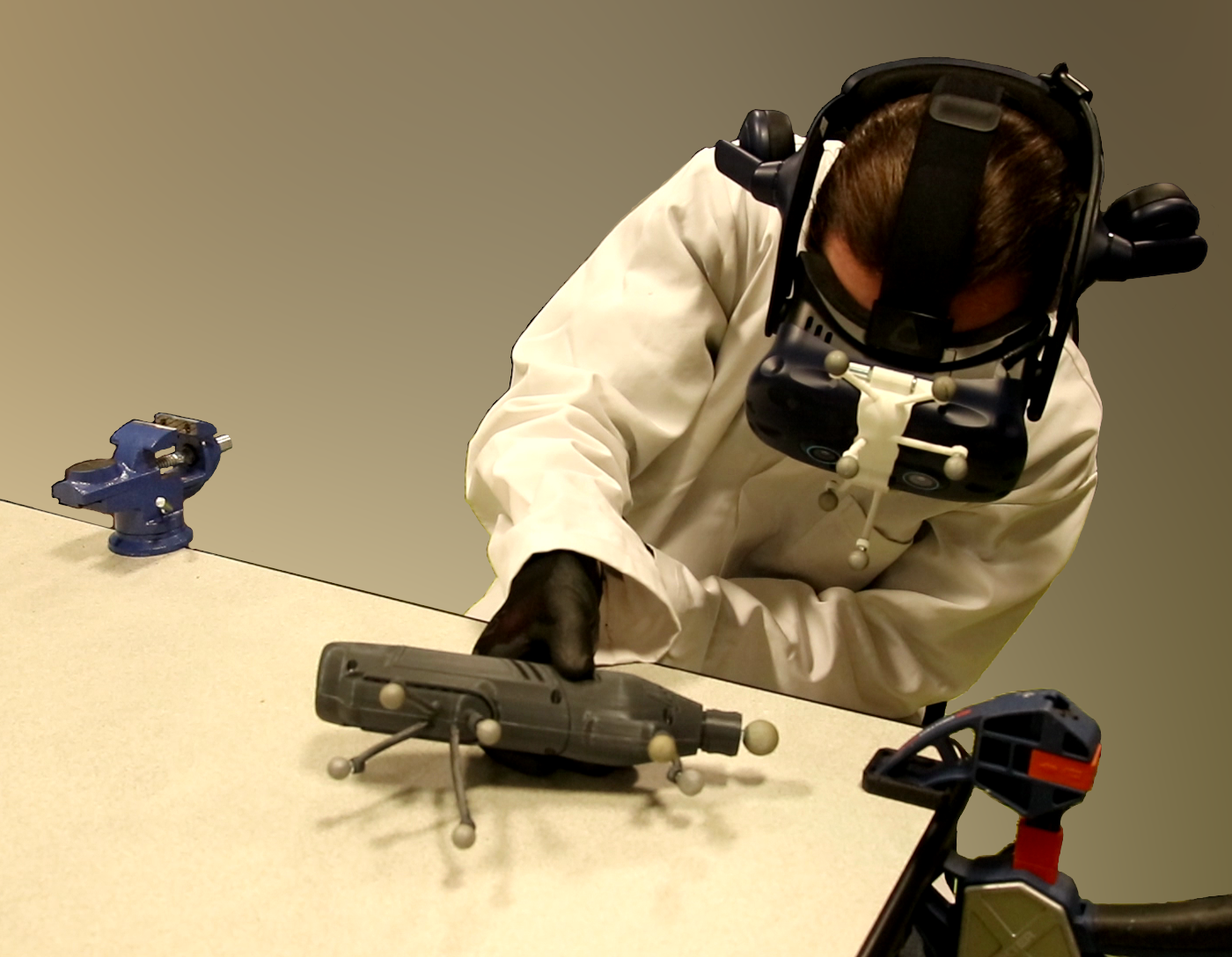
The experimental platform used a rotary tool and its tracked replicas to compare training conditions while retaining real pre- and post-training assessments. This makes it possible to evaluate not only interaction within VR, but also how practice transfers back to the physical task.
Experimental platform
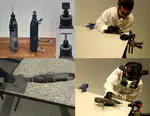
The thesis documents the complete bridge between the real and virtual task: a rotary tool and a tracked, ballasted replica; an assessment carried out with the physical tool; and immersive practice with the replica. These views make the experimental logic concrete.
Key findings
The doctoral work produced complementary evidence on the role of prop mass in VR. The results distinguish between immediate interaction quality and learning outcomes—two aspects that should be considered together when designing immersive training.
Virtual training · 80 participants
Learning transferred across the tested masses
In a study comparing replicas at 50%, 100%, and 150% of the original tool’s mass, learning outcomes were comparable across groups. The training also improved some measures of real-task performance, including completion time.
Pointing task · within-subject study
Mass still shapes the interaction experience
Replica mass influenced error-free selection time, errors, perceived difficulty, and cognitive load. The light replica led to better performance and user experience than the heavy replica in this task.
Experimental walkthrough
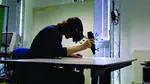
This video, produced during Lucas Thomesse’s internship, shows the pointing experiment from both perspectives at once: the participant handling the tracked replica and the corresponding first-person view in VR.
Featured publication
Featured publication · IEEE Transactions on Visualization and Computer Graphics · 2024
The main study evaluates whether changing a tracked replica’s mass affects the learning of a real technical gesture after virtual training.
Project team
The thesis was jointly supervised by IMT Atlantique, Lab-STICC, and Clarté. Julien Cauquis’s doctoral research formed its main scientific thread.
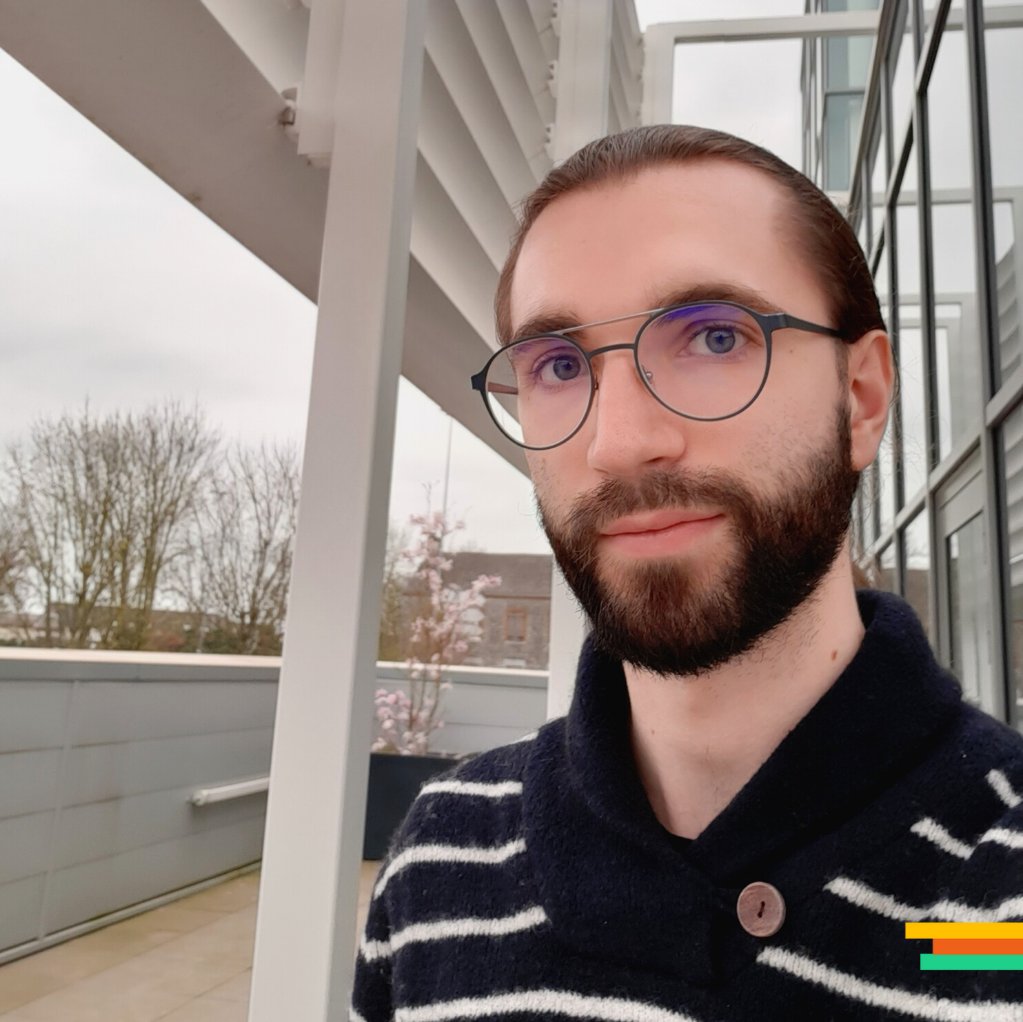
Julien Cauquis
Julien’s doctoral research examined how the physical properties of tool replicas influence interaction and technical-gesture learning in Virtual Reality.
Optimizing Sensory Feedback and Manual Interaction Efficiency within XR Experiments
Thesis defended on 2 July 2025 · Read the manuscript



Student contribution
Lucas Thomesse
Contributed to the study of how prop mass affects task performance and workload in Virtual Reality.