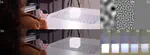
Enhancing Perceptual and Cognitive Processes in Augmented Reality Studies to Real-World Applications
Cotutelle PhD research project funded through MSCA COFUND AUFRANDE

Cotutelle doctoral research · 2025–2028
Making Augmented Reality research travel from carefully controlled experiments to the visually rich, changing situations in which people actually use it.
 Franco-Australian cotutelleIMT Atlantique × Adelaide UniversityA joint doctorate within CNRS IRL CROSSING, funded through the Horizon Europe MSCA COFUND AUFRANDE programme.
Abstract
Augmented Reality (AR) experiments are commonly carried out in tightly controlled laboratories, although real applications involve moving users, complex backgrounds, changing illumination, shadows, and interactions with both physical and virtual objects. These factors can create conflicts between real and augmented perceptual cues and limit the direct transfer of laboratory findings to ecological situations.
This cotutelle PhD project investigates how perceptual and cognitive processes studied in controlled AR experiments can be understood and supported in realistic environments. The work combines computer science, psychology, Human-Computer Interaction, experimental methods, and perception-driven spatial design.
Research trajectory
Isolate the cue
Controlled studies identify how a single visual condition—such as opacity, background, light, or shadow—changes the perception of augmented content.
Study the interaction
Experiments bring cues together with movement, physical surroundings, and real–virtual spatial relations to reveal their combined effects.
Design for use
Findings inform visual assistance, navigation, and interactive guidance that remain understandable in realistic situations.
Research objectives
Characterize laboratory–field differences
Identify perceptual conflicts caused by motion, lighting, shadows, backgrounds, and real–virtual interactions.
Develop transferable methods
Devise ways to adapt controlled experimental results to realistic AR scenarios.
Evaluate ecological conditions
Assess perceptual and cognitive performance in representative environments and tasks.
Support real applications
Improve visual assistance, navigation, and interactive guidance in complex environments.
People involved
PhD student

Min Ni
Min explores how environmental cues shape augmented perception beyond the laboratory, from visual conditions to real–virtual spatial interaction.
Current focus: surface-contact perception in optical see-through AR.
Supervisors
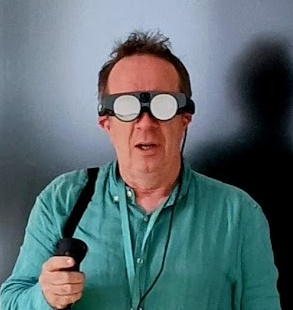


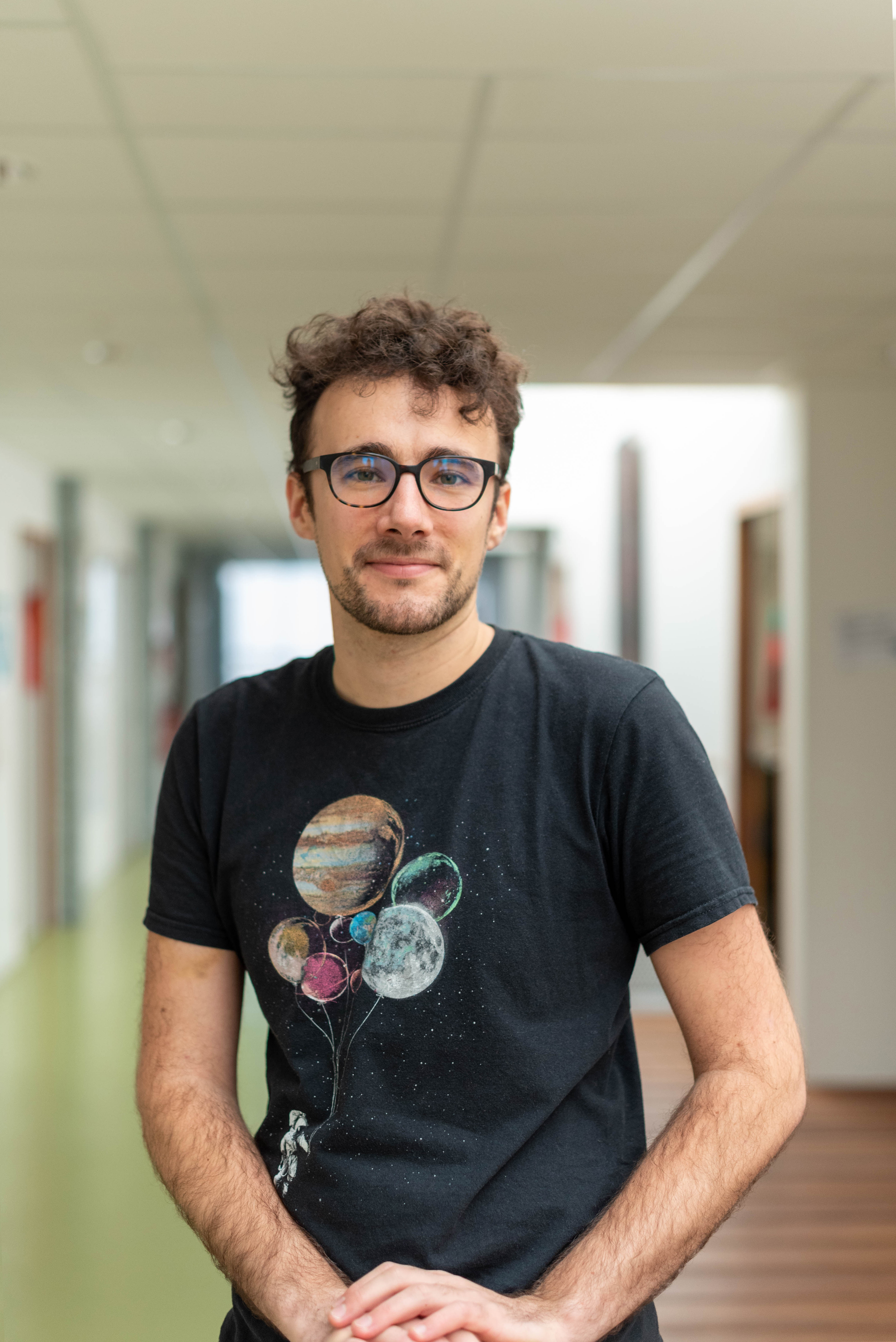

Dr Tim Chen
Senior Lecturer in Human–Computer Interaction and Augmented Reality, contributing expertise in spatial computing and ecological evaluation.
 Human-Computer Interaction Laboratory
The supervision is complemented by the broader AUFRANDE collaboration with Anna Ma-Wyatt, bringing expertise in perception.
Joint doctoral environment
Joint enrolment from February 2025 to January 2028.
Developed within the CNRS International Research Laboratory CROSSING, the French–Australian laboratory for Human / Autonomous Agents Teaming. This collaboration connects expertise in AR, perception, spatial behaviour, and ecological evaluation.
Publications
Funding
This research project is funded through the Australia-France Network of Doctoral Excellence (AUFRANDE), a Horizon Europe Marie Skłodowska-Curie Actions COFUND doctoral programme under grant agreement No. 101081465, with support from IMT Atlantique and Adelaide University. AUFRANDE is the funding and doctoral-training programme, not the name of this research project.